Shop / Tesamorelin
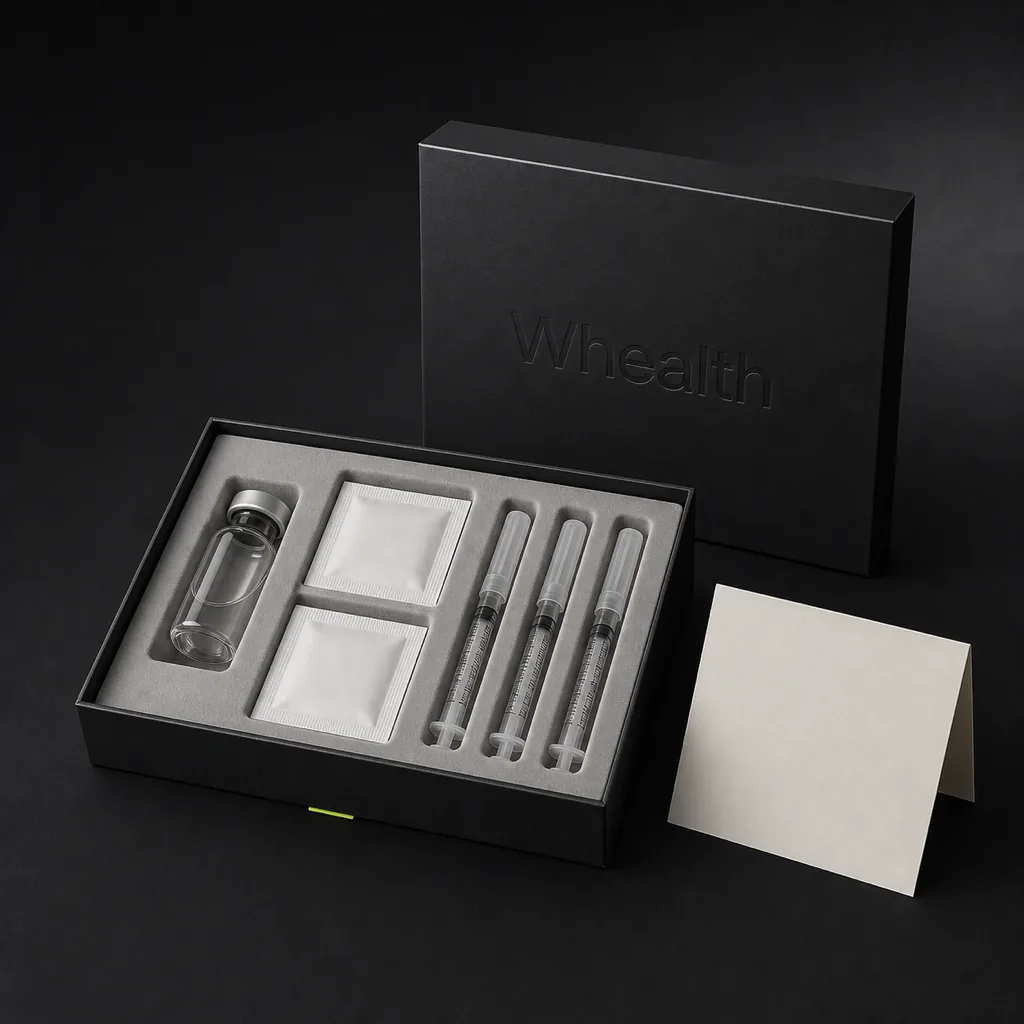
Tesamorelin
GHRH analogue · FDA-approved
Tesamorelin is a GHRH analogue marketed as Egrifta, approved in 2010 for excess abdominal fat in HIV-associated lipodystrophy. The approval and the trial are both real, and both are about that population.
Used outside it, this is off-label prescribing — legal, routine, and not the same thing as having been studied in someone like you. It also stops working when you stop; the trial measured visceral fat at 26 weeks, and the effect reverses on discontinuation.
Your clinician sets the actual schedule. This is the standard ladder and the one they start from.
Human data exists, but it is older, smaller or narrower than the claims commonly made about this compound.
Change in visceral adipose tissue at 26 weeks against +5.0% on placebo
Falutz · NEJM 2007Patients randomised in the pivotal trial
Falutz · NEJM 2007Year of FDA approval — for HIV lipodystrophy, not for general use
FDAWhat it is
Tesamorelin is a growth-hormone-releasing hormone analogue, marketed as Egrifta. It is genuinely FDA-approved — one of the very few peptides in this category that is — but for a specific indication: reducing excess abdominal fat in people with HIV-associated lipodystrophy.
How it works
Like sermorelin it works upstream, prompting your pituitary to release its own growth hormone rather than replacing it, so the feedback loop that limits GH stays connected. The trial evidence is about visceral fat specifically, not about body composition in general.
What the evidence actually says
-
2007
Pivotal trial
412 patients with HIV-associated abdominal fat accumulation. Visceral adipose tissue fell 15.2% at 26 weeks against a 5.0% rise on placebo, with IGF-1 rising as expected for the mechanism.
-
2010
FDA approval
Approved as Egrifta for that indication. Everything outside it is off-label prescribing, which is legal and routine but is not the same as being studied.
What the first months look like
- Weeks 1–4Daily subcutaneous dosing. Nothing much happens in the first month; injection-site reactions are the common early complaint.
- Week 12Bloodwork. IGF-1 is the objective read on whether the mechanism is doing anything in you.
- Month 6The trial measured visceral fat by CT at 26 weeks. Effects reverse on stopping — this is not a course that ends with a result you keep.
Who this is not for
- Active malignancy. GH signalling and tumour biology overlap and no responsible prescriber works around this.
- Pregnancy.
- Anyone with a disrupted hypothalamic–pituitary axis, where the upstream mechanism has nothing to act on.
Sources
Figures are quoted from the published trials and were last checked in August 2026. We update this page when the evidence changes.