Shop / Sermorelin
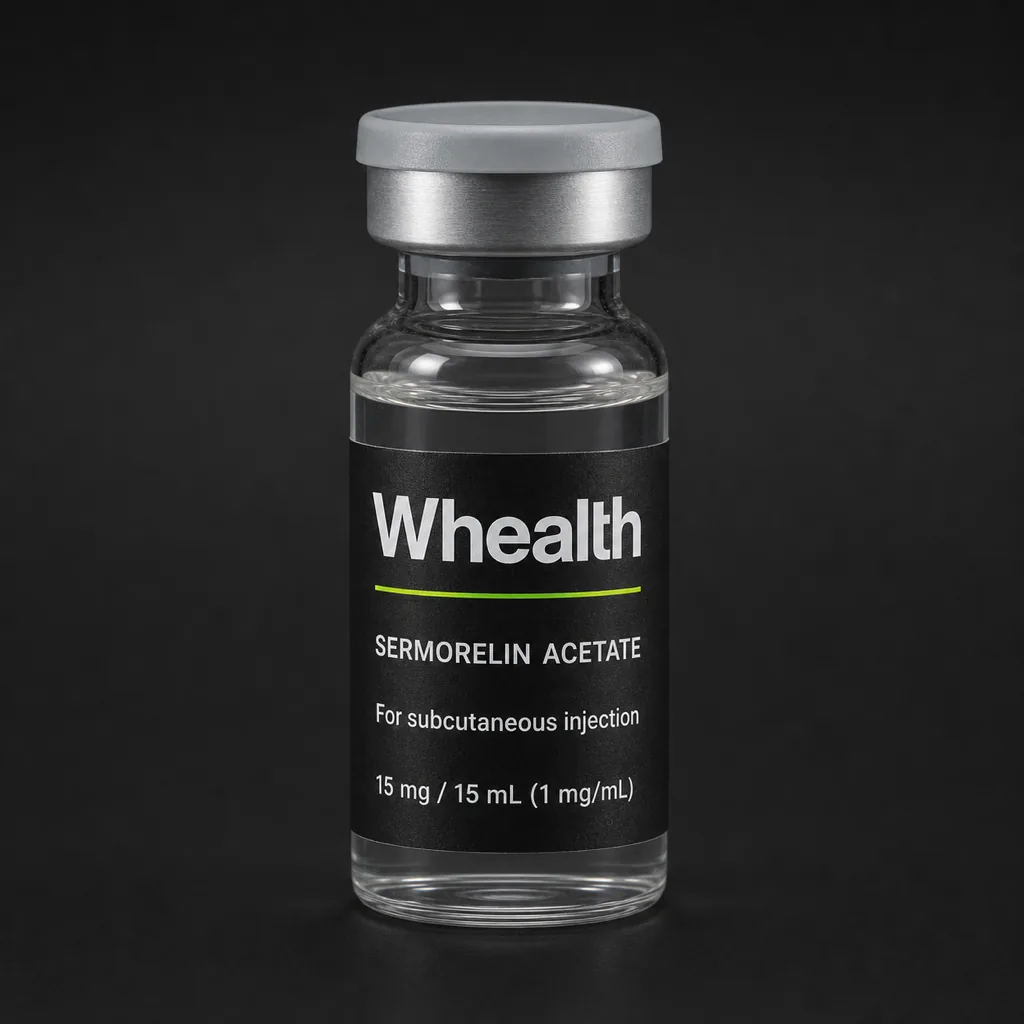
Sermorelin
Growth hormone secretagogue
Sermorelin is the first 29 amino acids of your own growth-hormone-releasing hormone — the active fragment, nothing more. It works one step upstream of growth hormone, prompting your pituitary to release its own rather than introducing it from outside, which leaves the feedback loop that limits it intact.
That is also why it is dosed at night and why nothing much happens in the first fortnight. You are amplifying a pulse that already exists in early deep sleep, not creating a new one. The week-12 bloodwork matters more than how any given week felt.
Your clinician sets the actual schedule. This is the standard ladder and the one they start from.
Human data exists, but it is older, smaller or narrower than the claims commonly made about this compound.
The residues of natural GHRH it reproduces — the complete active fragment
StructureYear the only FDA-approved sermorelin product left the US market
Geref, discontinuedCompleted large randomised trials of sermorelin for body composition in healthy adults
See the note belowWhat it is
Sermorelin is a 29–amino-acid peptide identical to the first 29 residues of your own growth-hormone-releasing hormone — the active fragment, and nothing else. It reached the US market as Geref, approved for growth hormone deficiency in children, and was withdrawn in 2008. There is no FDA-approved sermorelin product today; every prescription is a compounded preparation.
How it works
It acts one step upstream of growth hormone. Rather than introducing GH from outside, it prompts your pituitary to release its own, which leaves the somatostatin feedback loop intact — the brake stays connected. That is the mechanistic argument for it over injected HGH, and it is also why it is dosed at night: you are amplifying a pulse your body already produces in early deep sleep, not creating a new one.
What the evidence actually says
-
1999
Pediatric review
A review of sermorelin in the diagnosis and treatment of children with idiopathic growth hormone deficiency. This is where the substantive human evidence sits — in children, for a deficiency state.
-
2006
Adult-onset proposal
A commentary in Clinical Interventions in Aging arguing sermorelin is a better approach than HGH for adult-onset GH insufficiency. It is a well-argued commentary, not a trial, and it is frequently cited as though it were one.
-
2008
Market withdrawal
Geref was discontinued in the United States. Everything prescribed since has been compounded under section 503A.
-
2020
Class review
A review of growth hormone secretagogues concluded the class reliably raises GH and IGF-1, while clinical development for body-composition indications has largely not produced approved products.
What the first months look like
- Weeks 1–2A low nightly dose at bedtime, on an empty stomach. Most people notice nothing at all in the first fortnight, and that is the expected course.
- Weeks 3–12If anything changes early it is usually sleep quality. Treat that as a signal the dose is landing, not as the outcome you are buying.
- Week 12Bloodwork. IGF-1 is the objective read on whether this is doing anything measurable in you, and it matters more than how any given week felt.
Who this is not for
- Active malignancy. Growth hormone signalling and tumour biology overlap, and no responsible prescriber will work around this one.
- Pregnancy, or planning pregnancy.
- Anyone already on growth hormone or another secretagogue — the pathway is the same and stacking it is not additive.
- Anyone whose goal is a supraphysiologic GH level. That is not what this does, and a prescriber who promises it is describing a different drug.
Sources
- Prakash A, Goa KL. Sermorelin: a review of its use in the diagnosis and treatment of children with idiopathic growth hormone deficiency. BioDrugs 1999;12(2):139–57. PMID 18031173.
- Walker RF. Sermorelin: a better approach to management of adult-onset growth hormone insufficiency? Clin Interv Aging 2006;1(4):307–8. PMID 18046908.
- Ishida J et al. Growth hormone secretagogues: history, mechanism of action, and clinical development. JCSM Rapid Communications 2020;3(1):25–37.
Figures are quoted from the published trials and were last checked in August 2026. We update this page when the evidence changes.